
This ain't no technological breakdown...
A study in climate grief

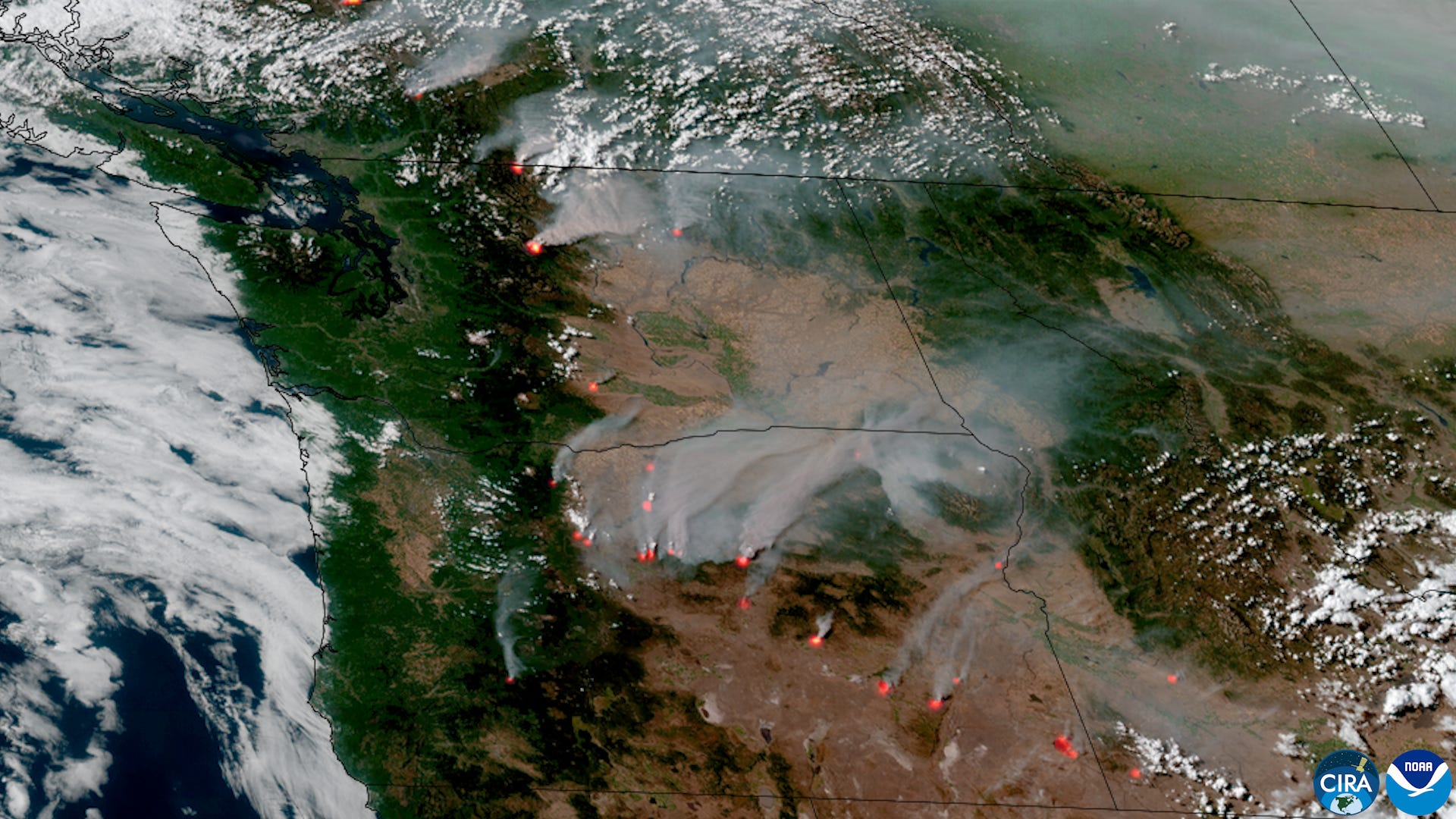
.png#/media/File:Burning_Wildfires_Scorch_the_Pacific_Northwest_and_British_Columbia_(CIRA_2026-07-24).png)
For various reasons I have little recollection of my childhood; but I do remember that my interest in environmental matters was sparked in the early 1990s. At that point the word was getting out fast, just in time for an awkward, unhappy and rather snobbish schoolkid to absorb considerable amounts of it, and then to attempt writing stories that looked ahead to the bleak future down the centuries that was hinted at, with the naivete and clumsiness of youth.*
I had a nightmare at the time, which I never forgot; it involved several of us local to where I lived preparing to go to space in a craft that seemed very cramped and small, and made of bare metal. As we stood inside it, the vessel and its innards grew uncomfortably warm under the unrelenting sun. Would we be gone in time? I never found out. But the image stayed with me, revived to some extent each time I read a fresh item of bad news.
The kid of 35 years ago would perhaps be disappointed by the adult writing these words today, who has not really shone in any respect; they would likely be astonished, too, by the rapidity with which our world has since heated up, and the intensity of the events accompanying it. The desolate scenes they envisaged as taking place in the 26th century are here already. Multiple habitations all over the world are changed beyond recognition; increasing numbers of regions have become tinderboxes, including heavily populated ones.
Climate change is in effect now. We are experiencing the consequences of decades of inaction now. Only bad faith actors and their most obstinate adherents can claim that the matter is still a future problem, or a hypothetical. Too many have already died; far more face intolerable suffering, freak weather and fundamental uncertainty that will probably only grow worse with time.
The history of our collective failure is in part due to the aforementioned bad faith, propelled by greed and carelessness, which led to concealment of the problem when identified by Exxon scientists 50-ish years ago, and thereafter to politicians, usually bought, evincing various degrees** of denial and minimisation. Yet the species-wide tragedy is, I think, broader than this: it consists in the narrowness of scope by which we are constantly hampered: our perception limited in both time and space, as well as in experiential terms. Privilege often works to hem in still closer our visionary range; ownership of wealth or property, secure relationships and/or high cultural status serving largely as buffers between those enjoying them and everyone else.
Our shuttered comprehension has become our Achilles’ heel, the human equivalent of Frodo on Mount Doom unable to destroy the One Ring. It has brought about a desperate avoidance that explains much of why far-right demagogues with their ostensible easy answers and recklessly optimistic PR machines have gained so much traction of late. With their help, many are now responding like the rabbits in Richard Adams’ warren of the snares, willing to look at anything but the naked truth waving in all our faces.
Except that in some cases this has led to terrible voting choices, I am not sure I can blame the ostriches among us. The sense of helplessness I’ve felt as the world grows hotter and our chances of ultimate survival grow less, which has been in some ways carefully cultivated, is pervasive and difficult to address. The most powerful continue to coax the average citizen, by a variety of means, into believing themselves powerless. It is an easy argument to win.
But from what I can see, the fight is far from over. Even if we have crossed enough tipping points to make things precarious, still everything we can do to reduce emissions is helpful; the more, of course, the better; but no action resulting in that reduction should be dismissed, unless and until there comes a moment when we really have no more options for averting any part of our self-made disaster. And I suspect that moment can only arrive with our own complete extinction. While there’s life, there must be hope.
In memory of what is irrevocably gone, and in honour of lives yet unborn, may we never surrender to despair. I hereby pledge my refusal to do so. Yet I must also mourn the losses - of species, of habitations, of human lives cut short, of the better future we could have given today’s youth. Each new evidence of dithering endeavours and missed chances hurts my heart a little more. Did I fail that child who cared so much (and still does)? I don’t know. Perhaps, like in the dream, I never will.
* Sadly, I was not inspired with the brilliant idea of organising heroic school strikes. Though I could never in any case have mustered the internal excellence to become what Greta Thunberg has.
** Pun not intended.

You really are an excellent writer, Ms. Thing. And a gift to us all. I think the eclipse path cuts across Europe, though of course the climate crisis is everywhere